
Member Spotlight: Michael Schmaltz
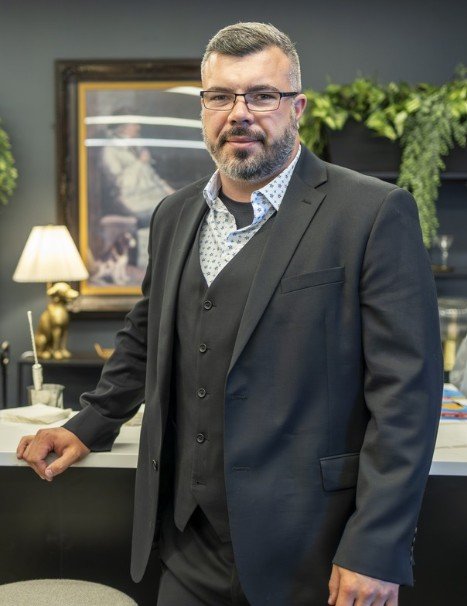
Michael Schmaltz
Owner
From Michigan comedy stages to pioneering virtual reality trainings, and even transforming the roofing industry, Mike’s career is a masterclass in curiosity, creativity, and resilience. Today, he sits at the helm of Under My Roof, a company born out of a desire to bring integrity back to exterior home remodeling. But before he was a "trusted contractor," he was a bouncer, a salesman, a VR developer, and even a "soaping" enthusiast. We sat down with him to discuss how a background in sales and the "Art of Stupidity" helped him build a business based on radical trust.
You’ve had an incredibly diverse career path. Looking back, what is the common thread that ties all these different roles together?
It’s always been sales. I started in call centers doing cold calling out of physical phone books—which was rough, but it’s the best education you can get. Everyone can always use a salesman; you can go anywhere in the country and find someone who needs something sold.
I actually got my start in sales because of stand-up comedy. I was doing open mics, and someone told me, "Dude, you should try sales." Comedians make great salesmen because you’re already comfortable on a stage. You learn how to apply pressure while keeping the other person comfortable. That fear of talking to people is one of the biggest hurdles, and comedy just strips that away.
You’ve worked for large corporations and small startups. How did those experiences shape your own approach to business?
I’m a big believer in working for a company where you’re treated like a number for a little while. You need to experience high-volume environments where the boss doesn’t even know your name. It teaches you how to grow, how systems work, and what you want (or don’t want) for your own resume. For me, I always moved around because I didn't want a "ceiling." If I stayed at one job too long, I’d stop learning. I wanted to see every side of the industry.
You mention "The Art of Stupidity" in your sales philosophy. Can you explain what that means in practice?
It’s really about narrative control. In sales, you can change a narrative by knowing exactly what a person meant but "playing stupid" to make it mean something else. If someone says, "That’s expensive," they are usually trying to get you to lower your price. Instead of reacting to that, I’ll just agree: "I know, right? It’s crazy how much things cost now." It completely shifts the power dynamic and flips the conversation back to the value of the product rather than a negotiation over price.
You’ve also pioneered some high-tech solutions in a very traditional industry. Tell us about virtual reality training.
I spent two years learning how to develop VR experiences for sales training. I saw that in the roofing industry, the biggest problem is training people to be serviceable quickly. Usually, new guys have to shadow the best salesman, which limits how many people you can train.
With VR, I created over 200 trainings where a new hire can put on a headset and literally shadow me on a lead from their first day in the office. They can pause it, rewind it, and see exactly how to handle a homeowner’s concerns. It was a game-changer for getting people in the field faster.
Your company, Under My Roof, was born during a very turbulent time in the industry. What was the catalyst for starting it?
I was a GM at a company where things were falling apart—suppliers weren't being paid, and the reputation I’d spent years building was on the line. I realized I had to get out and start my own thing before those bridges were burned for good.
We opened, and two weeks later, I landed a 41-unit townhouse association job. But more importantly, I started reaching out to the homeowners who had been left high and dry by my previous employer. We did their roofs at cost—no profit, just material and labor. We even did jobs with no deposits because I knew their trust in contractors was completely gone.
That’s a huge risk for a brand-new company. Did it pay off?
It was a "nail-biter" for sure. I was floating a lot of money to help these families. But now? I’m their contractor for life. That goodwill is worth more than any marketing budget. We even got featured on CBS News Chicago because we were fixing the mistakes of others. That trust is why we’re so busy today. In this industry, you don’t need to be a genius; you just have to do what you say you’re going to do.
Even with a successful roofing company, you’re still launching new ventures. Tell us about the pickleball paddle.
That’s my winter project. It’s called “Top Shot”. It took a year of back-and-forth with manufacturers in Hong Kong and navigating the USA Pickleball certification process. It’s a high-end paddle that we’ve had to perfect down to the foam in the boxing.
I’ve always liked doing "extra" things. Whether it’s selling autographed paintings of Mike Tyson and Dennis Rodman or starting IDC (I Don’t Care) Grading for card collectors who just want their cards protected, I’m always observant of what people are buying. If I see a gap in the market, I’m going to try to fill it.
What’s next for you?
Right now, I'm focused on removing the "ceilings" for my team. I tell everyone I interview: "Work for me for three years, and I’ll teach you everything you need to know to start your own company." People ask why I’d create my own competition, but if you look out for someone’s future, they’re going to give you their best while they’re with you. That’s the experience I want to deliver.
______
Michael’s career is a perfect reminder that the right mix of skill, creativity, and integrity can turn even the riskiest pivot into lasting success. If his approach inspires you, or if you’re curious how the “Art of Stupidity” could reshape your own sales and leadership style, check out his company at Under My Roof or grab a copy of his book,The Art of Stupidity.
